
News News Official
Helldivers 2 opens the Void and disrupts its mission routine
The Gateway is now open in Helldivers 2. With the Illuminate Void, Arrowhead is doing more than introducing new enemies and environments: the studio is also changing how operations are constructed so squads cannot rely quite as heavily on familiar routines.
 By Nolind Helldivers 2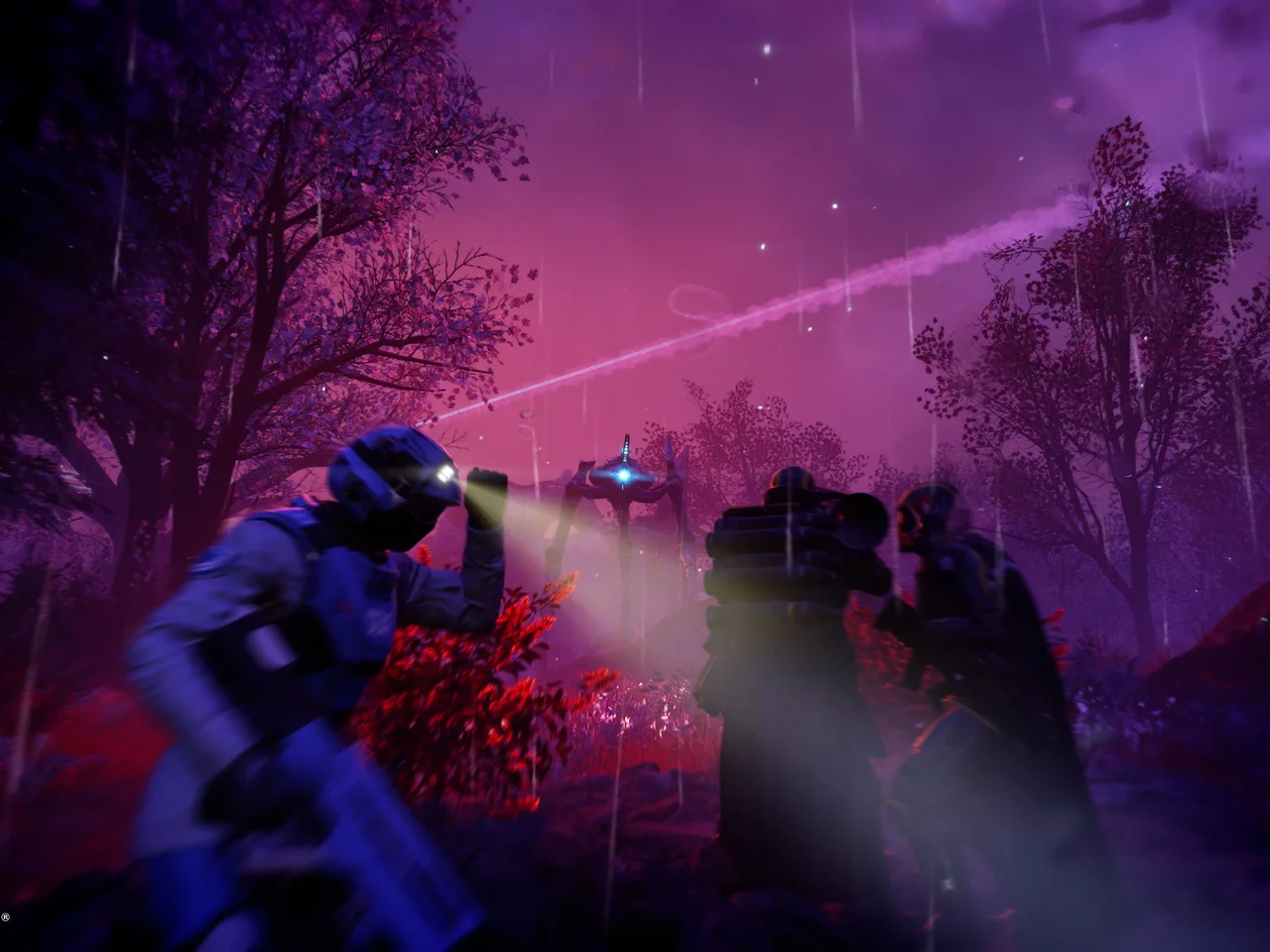
On August 18, Arrowhead confirmed that the Helldivers had crossed through the Gateway built on Rirga Bay and entered the Illuminate Void. This new phase expands on the Devoid of Liberty update released several days earlier, but more importantly it reveals how the studio wants missions inside the region to work.
The biggest difference is the structure of an operation. Arrowhead says dives inside the Void are less linear and feature several randomized primary objectives for every operation. It is not the flashiest feature to put in a trailer, but it may be the change with the greatest long-term impact on the game.
Less routine, more adaptation
Helldivers 2 tends to be at its best when the plan made aboard the Destroyer fails to survive the first few minutes on the ground. A patrol appears at exactly the wrong moment, a Stratagem lands dangerously close to the squad, and a straightforward mission turns into an improvised retreat. By varying primary objectives more aggressively, Arrowhead introduces another layer of uncertainty before players even start creating disasters of their own.
The important question is how deep that randomization actually goes. Rearranging a handful of familiar objectives will not refresh the loop for long if they are always solved in exactly the same way. But if different combinations genuinely encourage different equipment, routes and priorities, the Void could make experienced squads discuss their plans again instead of simply executing an optimized routine.
A camera gives squads something else to do
Arrowhead is also introducing a tactical video camera used to document discoveries inside the Void. Helldivers are asked to conduct reconnaissance, investigate corrupted worlds and identify Illuminate technology or structures before continuing the more familiar business of destroying them.
Helldivers 2 is obviously not becoming a stealth game. Its main language remains heavy weapons, orbital strikes and questionable decisions made under pressure. The camera does, however, create moments where information can matter as much as firepower. Observing before attacking can alter the pace of an operation and give squad members another reason to divide responsibilities naturally.
Even extraction becomes less automatic
Void planets also allow squads to unlock secondary extraction zones. That may sound like a minor addition, but it directly affects risk management. A team can spend time securing another way out instead of being forced to cross the entire map once its objectives are complete.
The feature becomes interesting when that security carries a meaningful cost. If unlocking another extraction exposes the squad, consumes precious time or draws players away from their main objectives, it becomes a genuine tactical gamble. Helldivers 2 has always been very good at tactical gambles, particularly the kind everyone realizes were terrible about five minutes later.
The Void now needs meaningful variety
The campaign pushes players toward the Source Planet, formerly known as Seasse, through environments transformed by the Void and filled with Illuminate ruins. Arrowhead also identifies new creatures including the Wretch and Crusher, while SEAF support squads can assist Helldivers during operations.
- Operations can draw from several randomized primary objectives - A tactical camera supports documentation and reconnaissance missions - Players must identify and destroy Illuminate structures - Secondary extraction zones can be unlocked - SEAF squads can support Helldivers in the field
None of these additions completely transforms the formula on its own. Together, however, they point in a coherent direction: making operations harder to predict and creating more small decisions capable of changing how a mission unfolds. That is where Helldivers 2 is usually strongest, when its systems provide enough structure for a squad to form a plan but enough instability to ensure that plan rarely survives intact.
The remaining question is whether the Void contains enough combinations and situations to preserve that feeling after dozens of dives. The premise is promising. In a game that routinely turns a simple extraction into an absurd war story between friends, more structural uncertainty may prove more valuable than simply adding another set of targets to shoot.